Machining stainless steel with carbide end mills can be challenging due to edge chipping, leading to tool failure, poor finishes, and downtime. This guide provides practical solutions trusted by professional machinists.
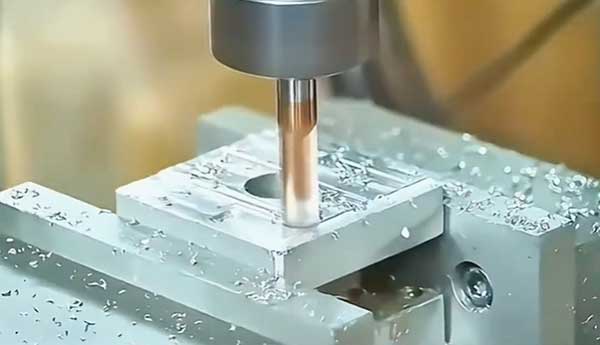
Why Edge Chipping Occurs in Stainless Steel Machining
Stainless steel’s properties contribute to tool damage:
Work Hardening: Austenitic grades (304/316) harden under heat.
Abrasive Particles: Chromium carbides accelerate wear.
High Cutting Forces: Requires stable setups.
Thermal Stress: Uneven heat weakens edges.
Carbide end mills are prone to these stresses, but proper tool selection and process optimization can mitigate them.
7 Effective Ways to Prevent Edge Chipping
1. Choose the Right Carbide Grade & Geometry
Grade Selection:
Use micro-grain carbide (≤0.8µm) for toughness.
High cobalt content (8-10%) enhances shock resistance.
TiAlN/TiCN coatings extend tool life by 30%.
Geometry Tips:
35-45° helix angles balance chip evacuation and strength.
Reduced neck designs minimize vibration.
Polished flutes prevent chip welding.
Pro Tip: Kennametal HARVI I TE and Sandvik CoroMill Plura excel in stainless applications.
2. Optimize Cutting Parameters
Avoid excessive speed.
Recommended parameters:
| Material | SFM (m/min) | Chip Load (mm/tooth) | Axial DOC (mm) | Radial DOC (mm) |
|---|---|---|---|---|
| 304/316 SS | 60-90 | 0.05-0.10 | 1-2×D | 10-15% of D |
| Martensitic SS | 70-100 | 0.08-0.12 | 1.5-3×D | 15-20% of D |
| Duplex SS | 50-80 | 0.04-0.08 | 1-1.5×D | 8-12% of D |
Reduce parameters by 20% for hardened (>35 HRC) stainless.
3. Master Chip Control
Chip Thickness: Maintain 0.08-0.15 mm.
Evacuation: Use compressed air or coolant-through tools.
Milling Direction: Always prefer climb milling.
Visual Cue: Silver-blue C-shaped chips are ideal; brown chips indicate excessive heat.
4. Implement Advanced Cooling Strategies
High-Pressure Coolant (70-100 bar):
Reduces cutting zone temps by 40%.
Extends tool life 2-3×.
MQL Systems:
Use vegetable-based oils with EP additives.
Maintain 50-100 mL/hour flow.
Angle nozzle within 15° of cutting edge.
Critical: Avoid dry machining—thermal shock causes edge failure.
5. Machine Setup Best Practices
Tool Runout: Keep below 0.01 mm TIR.
Workholding:
Use hydraulic/pneumatic chucks (<0.005 mm variation).
Support overhangs with steady rests.
Spindle Speed: Stay within 80-90% of max RPM.
Quick Check: If vibration marks appear, reduce radial engagement first.
6. Edge Preparation Techniques
Edge Honing: 0.02-0.03 mm radius improves chip flow.
Land Angles: 0.1×D land width with 3° negative rake.
Variable Pitch: Unequal flute spacing reduces vibration.
Cost-Saver: Properly honed reground tools perform nearly as well as new ones.
7. Material-Specific Solutions
Austenitic (304/316):
Use sharp edges with polished flutes.
Increase feed rates to avoid work hardening.
Martensitic (410/420):
Apply AlCrN coatings for abrasion resistance.
Reduce cutting speeds by 15% vs. austenitic.
Precipitation-Hardened (17-4PH):
Use low-friction ZrN coatings.
Maintain constant feed to prevent rubbing.
Real-World Results: Case Study
A Texas aerospace manufacturer reduced edge chipping by 83% in 316L parts by:
Switching to 5-flute variable helix end mills.
Increasing feed from 0.06 to 0.09 mm/tooth.
Adding high-pressure coolant (80 bar).
Implementing toolpath optimization software.
Result: Tool life increased from 45 to 132 parts per edge.
Maintenance Checklist for Long Tool Life
Daily:
Inspect for micro-chipping with 10× magnification.
Clean collets and tool holders.Weekly:
Rebalance tool holders.
Calibrate coolant concentration.Monthly:
Check spindle runout.
Replace worn workholding components.
FAQ: Quick Answers for Machinists
Q: Can I use the same end mill for stainless and aluminum?
No. Aluminum-specific tools have high rake angles that increase chipping risk in steel.
Q: How often should I rotate inserts in indexable end mills?
Every 15-20 minutes of cut time in stainless operations.
Q: What's the first parameter to adjust if chipping occurs?
Reduce radial depth of cut by 30% before modifying speed/feed.