Ensure burs are compatible with your milling machine (shank diameter, length, clamping).
Choose proper coatings: CVD Diamond or DLC for zirconia.
Select geometry according to milling stage: roughing, finishing, micro-details.
Evaluate cost efficiency by bur lifespan and single-unit cost.
Test burs in small batches before full-scale adoption.
1. Understand Your Milling Machine Compatibility
Key Consideration: Ensure the burs are compatible with your specific milling machine model.
Shank Diameter: 3 mm / 4 mm / 6 mm
Overall Length: Match the bur's length with your machine's capacity
Clamping System: Secure fit in collet/chuck
Tip: Always consult your milling machine's manual or manufacturer for compatibility details.
2. Choose the Right Coating for Zirconia
Key Consideration: The coating affects the bur's durability and performance.
CVD Diamond Coating: Excellent wear resistance, ideal for extended use.
DLC (Diamond-Like Carbon) Coating: Balance between performance and cost.
Uncoated Burs: Suitable for softer materials, not recommended for zirconia.
Tip: For zirconia, diamond-coated burs are generally preferred due to superior hardness.
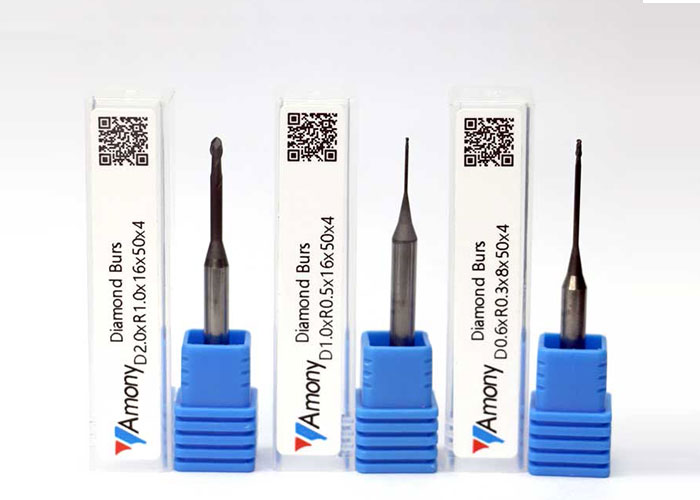
Recommended Product:
CVD Diamond Coated Zirconia Milling Bur
High-precision burs for pre-sintered zirconia. Suitable for crowns, bridges, and full-arch milling.
3. Select Appropriate Bur Geometry
Key Consideration: The bur's shape and size should align with the specific milling task.
Rough Milling: Larger diameter, fewer flutes for efficient material removal.
Finishing: Smaller diameter, more flutes for detailed work.
Micro/Detail: Specialized shapes for margins and occlusal areas.
4. Evaluate Durability and Cost Efficiency
Key Consideration: Assess the bur's lifespan and cost-effectiveness.
Longevity: High-quality burs may cost more upfront but last longer.
Cost per Unit: Calculate cost per restoration for best value.
5. Consider Material-Specific Requirements
Key Consideration: Different materials may require specific bur characteristics.
Zirconia: Diamond-coated burs required.
Softer Materials (PMMA, wax): Uncoated burs may be sufficient.
6. Verify Quality and Certification
Key Consideration: Ensure the burs meet industry standards.
ISO Certification: ISO 9001 or equivalent
Manufacturer Reputation: Choose known, reputable suppliers
Tip: Request certification documents from suppliers to verify compliance.
7. Testing and Evaluation
Key Consideration: Test burs before full-scale implementation.
Trial Runs: Assess performance and compatibility
Feedback: Gather technician input
Conclusion
By focusing on machine compatibility, coating, geometry, durability, and material suitability, labs and clinics can select burs that deliver high-precision, efficient, and cost-effective zirconia milling.