When it comes to achieving high-speed finishing and excellent surface quality in steel or cast iron machining, traditional carbide inserts often fall short—especially in operations that demand tight tolerances and clean surface finishes.
That’s where cermet inserts come in.
If you’re in the metalworking or CNC machining industry and want to improve productivity without compromising on precision, understanding what cermet inserts are—and when to use them—can make a noticeable difference in your machining strategy.
What Is a Cermet Insert?
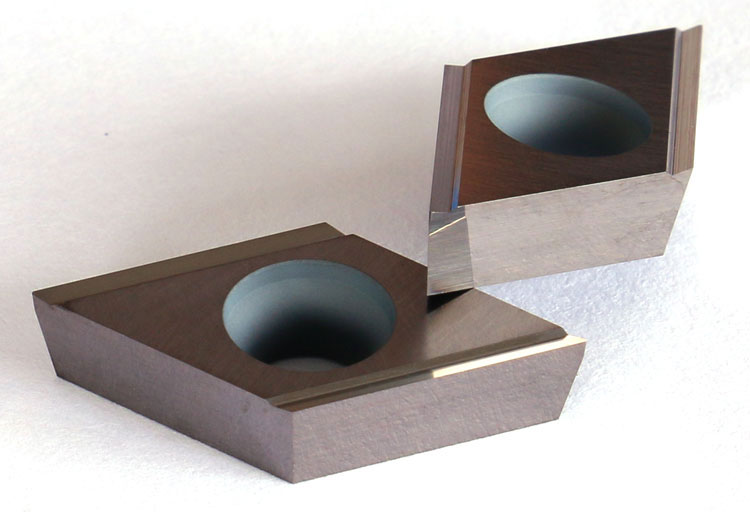
A cermet insert is a type of cutting tool insert made from a hybrid material that blends ceramic particles (typically titanium carbide, titanium nitride, or similar compounds) with metallic binders such as nickel or cobalt.
The name “cermet” is derived from “ceramic” + “metal.”
Unlike traditional carbide inserts, which use tungsten carbide and cobalt as their base, cermet inserts are optimized for finishing operations, offering superior wear resistance, better heat resistance, and excellent edge retention at high cutting speeds.
Key Benefits of Cermet Inserts
✅ 1. Excellent Surface Finish
Cermet inserts are well-known for producing mirror-like finishes with minimal burrs or tool marks. They are especially effective in:
Fine turning
Contour finishing
Machining parts that require post-process-free surfaces
This is why they’re widely used in the automotive and bearing industries.
✅ 2. Stable Wear and Long Tool Life
Cermet has excellent chemical stability, which reduces crater wear and adhesion between the insert and the workpiece. This means:
Consistent tool wear
Longer insert life
Reduced tool change downtime
For high-volume finishing runs, this directly translates to cost savings and predictable performance.
✅ 3. Heat Resistance at High Cutting Speeds
Cermet inserts are ideal for dry or semi-dry machining at high speeds. Their thermal properties allow them to:
Withstand high cutting temperatures
Retain hardness
Reduce built-up edge (BUE)
If you're looking to reduce coolant usage or boost efficiency on CNC lathes, cermet is a good fit.
Best Applications for Cermet Inserts
Cermet inserts perform best in:
Continuous finishing operations
Turning low-carbon steel or alloy steel
Cast iron machining (when interrupted cuts are minimal)
Hard turning (up to 45–50 HRC) in some stable conditions
Industries where cermet is commonly applied:
Automotive components (shafts, bushings, hubs)
Hydraulic and pneumatic parts
Precision bearings and spindles
High-speed turned surfaces
When NOT to Use Cermet Inserts
While cermet has many advantages, it’s not suitable for every job. Avoid using cermet inserts if:
Your machining involves heavy interrupted cuts
You're dealing with very hard materials (above 50 HRC)
The application requires shock resistance (e.g., roughing)
You’re cutting nickel alloys or stainless steel with high toughness
In such cases, coated carbide, ceramic, or CBN inserts may be more appropriate.
Cermet vs. Carbide: What’s the Difference?
| Feature | Cermet Inserts | Carbide Inserts |
|---|---|---|
| Base Material | Ceramic + Metal binder | Tungsten carbide + Cobalt binder |
| Surface Finish | Better for fine finishing | Good, but not as fine |
| Cutting Speed | Higher for light finishing cuts | Versatile across many operations |
| Wear Resistance | Excellent for continuous cuts | Better for interrupted cuts |
| Fracture Toughness | Lower than carbide | Higher—suitable for roughing |
Choosing the Right Cermet Insert
When selecting a cermet insert, consider:
Insert shape and geometry: Choose positive rake and fine honed edges for optimal finishing
Grade and coating: Some cermets come with TiCN or TiN coatings for added durability
Workpiece material: Ensure compatibility with carbon steel, alloy steel, or cast iron
Application type: Prioritize cermet for stable finishing jobs with minimal vibration
We Provide Precision-Engineered Cermet Inserts for Finishing Applications
At Amony, we manufacture and supply:
ISO-standard cermet turning inserts (TNMG, CNMG, SNMG, etc.)
Uncoated and coated grades for different workpiece types
OEM and customized inserts tailored to your machining requirements
Competitive pricing with global shipping
Contact us today to request technical data, bulk pricing, or free samples for testing.